

Kallanai: the old stone dam that still feeds a delta
The Kallanai, or Grand Anicut, on the Kaveri near Tiruchirappalli is credited by tradition to Karikala Chola and still sends river water into the delta.
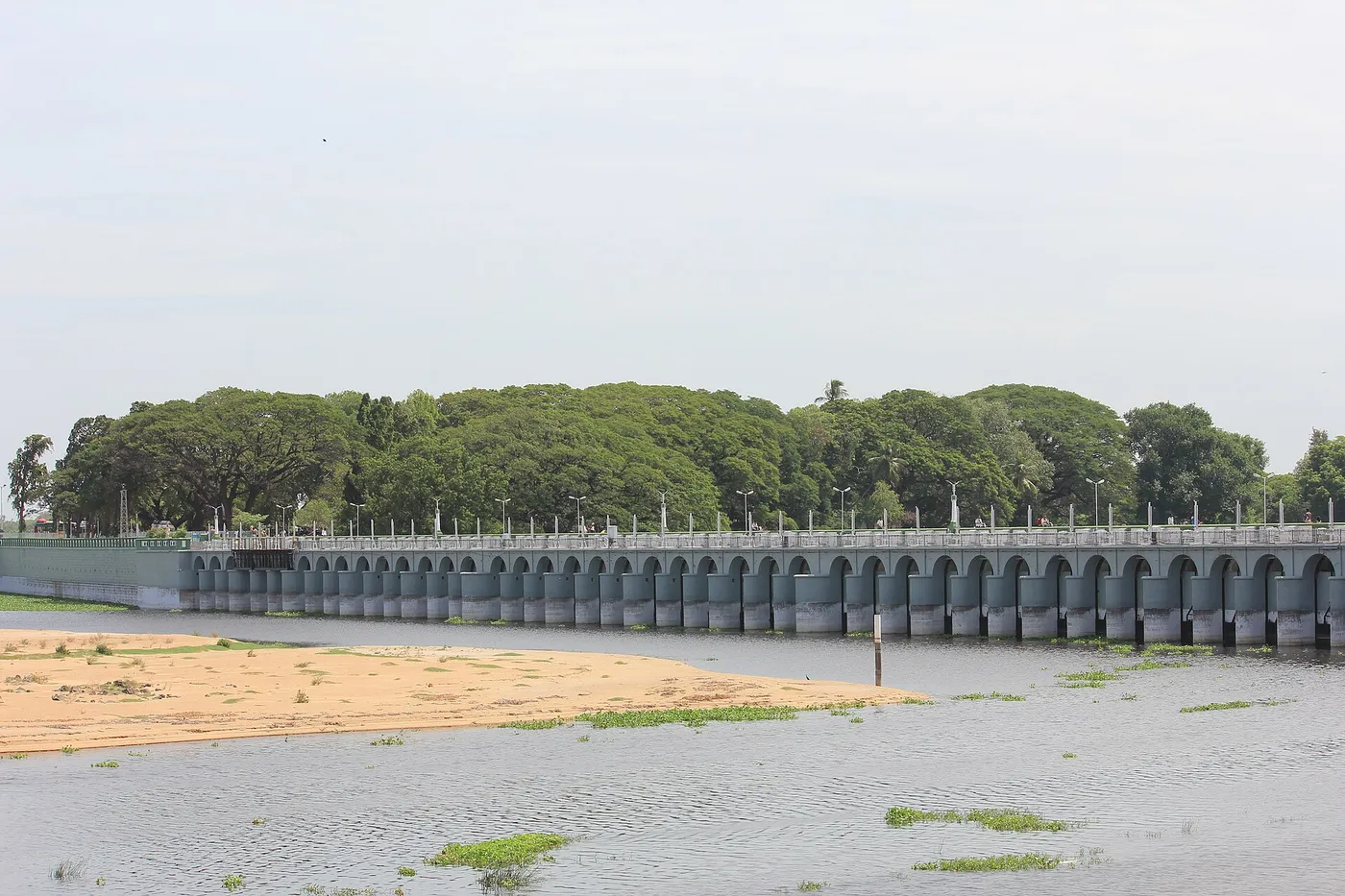

Some of the most important buildings in the world are not buildings at all. They are quiet structures that move water from one place to another. The Kallanai, also called the Grand Anicut, is one of them.
What it does
The Kallanai stands on the Kaveri near Tiruchirappalli. Its job is simple to describe. It diverts river water into the Thanjavur delta, where canals carry it across the land for irrigation. That water is the reason this part of Tamil Nadu is known as a rice-growing country.
It is not a museum piece. The structure is still used today, which is why it is often described as among the oldest water-regulation structures still in use.
It was built to share a river, and it is still sharing it.
An old name and an old tradition
The name is usually taken to mean “stone dam.” The Kallanai is commonly attributed to Karikala Chola, the best-known of the early Chola kings, and the tradition is very old. If you want to know more about him, read Karikala Chola: the king who tamed a river.
Dating is debated. Sources range from around the second century BCE to the second century CE, so the careful phrase is this: in the early centuries of the common era, by tradition. No one can say precisely, and it is better to admit that than to pretend.
Why a dam like this was clever
The Kaveri carries a great deal of water in some seasons and much less in others. A structure that sits in the river and steers the flow can turn that uneven supply into something farmers can count on.
The Kallanai does this with weight and patience rather than with machinery. Water is spread across the delta’s channels, and the land beyond it grows green. It is one reason the Kaveri country has been rich for so many centuries.
Repairs and care
An old structure survives because people look after it. The Kallanai was repaired and improved over time, and the work of Arthur Cotton in the nineteenth century is well documented. His improvements are part of why the Kallanai remains useful now.
That mixture matters. What stands today is a tradition, a working piece of engineering, and generations of maintenance, all sitting in one place.
Seeing it for yourself
If you visit, go slowly. Watch how the river moves and how the water divides. Look for the small details, such as the way people use the bank. It is a place where history is not behind glass. It is something the delta still depends on.
The nearby posts in this series connect the dam to its landscape, including the Kaveri and the Kollidam and the early capital at Woraiyur.
Work nearby
Teapot Coworks is in Woraiyur, Tiruchirappalli. If a day of sightseeing leaves you with work to do, we have fast Wi-Fi, power backup, air conditioning, secured access with CCTV, and a meeting cabin set up for video calls. You can start with a daily plan, and you can book a desk when you are ready.