

The Kaveri and the Kollidam: the rivers that shaped Trichy
Two rivers wrap around the Srirangam island and feed the Kaveri delta. See how the Kaveri and the Kollidam shaped Tiruchirappalli's temples, fields and history.
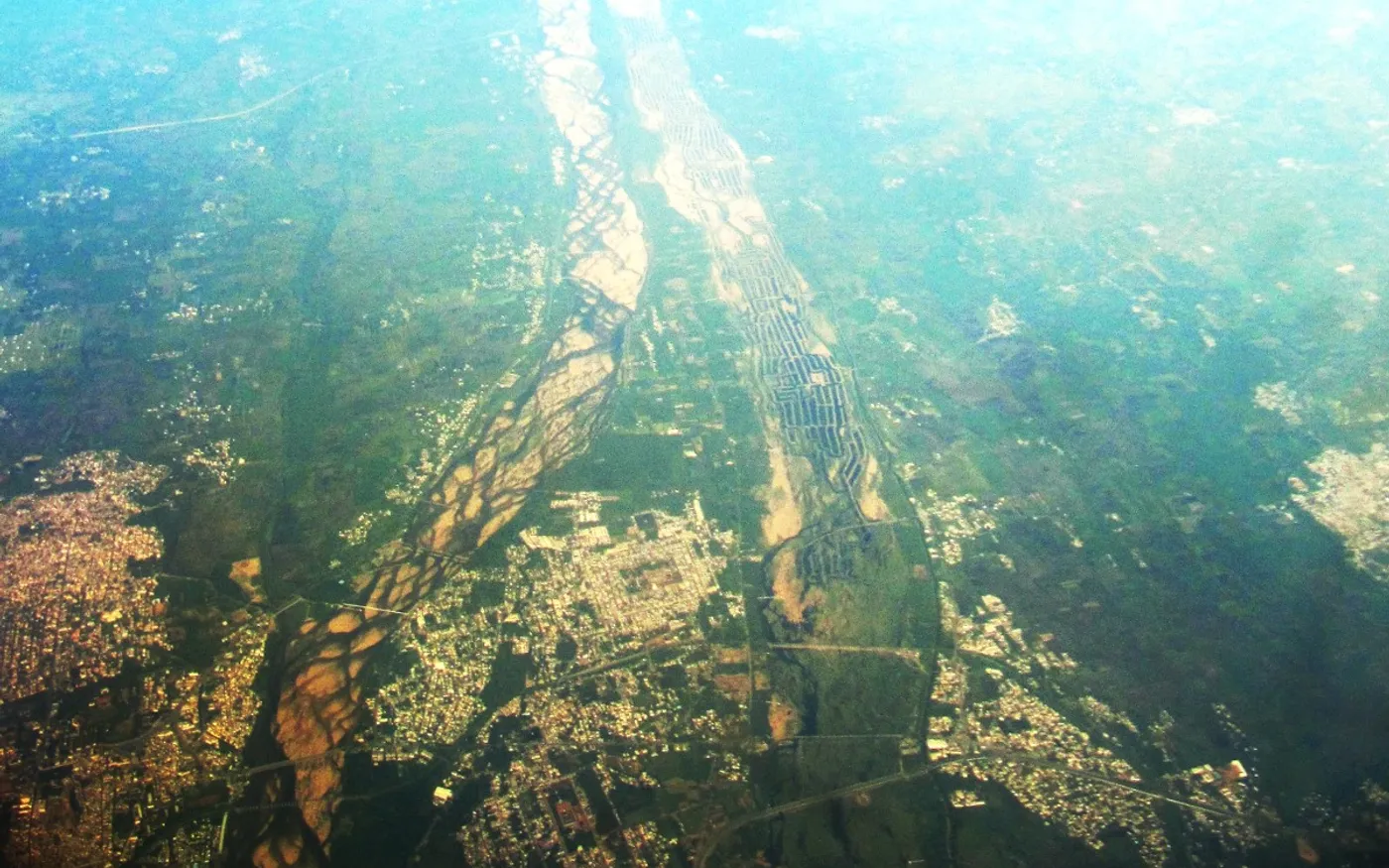

Tiruchirappalli is a city of rock and temple and busy streets, but it is easiest to understand from the water. Two rivers, the Kaveri and the Kollidam, run through the story of this place.
Two rivers and an island
The Kaveri and the Kollidam bound the island of Srirangam. The island sits between them, with the great Sri Ranganathaswamy Temple at its heart. The word “arangam” is taken to mean “island” in Tamil, so the name of the town carries the geography in it.
It is a small thing, but it changes how you see the place. The temple is not simply near the river. It sits within it, held between two streams.
The rivers did not just pass by the city. They drew its map.
The country the Kaveri made
Downstream, the Kaveri spreads out into a delta, the Thanjavur country, which is famous as a rice-growing region. The river and its canals feed the fields. The Kallanai, on the Kaveri near Tiruchirappalli, spreads the river’s water into the delta, and it is a large part of why the land is so green. Read more in Kallanai: the old stone dam that still feeds a delta.
When you travel by road through this region, the landscape tells the story. Wherever the canals reach, the land is fields and coconut palms. Where they do not, it feels different.
Why capitals grow here
An early capital needs water, food and a way to move. The Kaveri gives all three. That is part of the reason Uraiyur, today’s Woraiyur, became the seat of the early Cholas, as told in Woraiyur: where the early Cholas ruled from.
It also explains why tradition ties the early kings so closely to the river. Karikala Chola, remembered in Sangam poems, is credited by tradition with the Kallanai, and the poems linger on a land made rich by water.
Rivers as a place of worship
For many people, the Kaveri is more than a river. It is spoken of with respect, and many believe it to be sacred. The temples on and around the island have been shaped by that reverence over centuries, and bathing, festivals and daily ritual often involve the river.
If you visit, remember that you are a guest in a living tradition. Observe quietly, and ask before taking photographs of people.
How to see the rivers
You do not need a plan. Stand on a bridge in the late afternoon and watch the light change. Walk along a bank. Notice where the water is wide and where it narrows. The river is the best guide to Tiruchirappalli that you can find.
Then read the temples and the old stories against it. They make more sense when you know the water is there.
Work nearby
Teapot Coworks is in Woraiyur, Tiruchirappalli, a short distance from the river country. If you are visiting and need a desk, we offer fast Wi-Fi, power backup, air conditioning, secured access and housekeeping. Day passes are available when you book a desk.